

The Fort Worth Museum of Science and History Paleontological Oral History Project
Preserving firsthand accounts of discovery, science, and collaboration to deepen public understanding of Texas’ paleontological legacy.
In the fall of 2024, the Fort Worth Museum of Science and History was awarded a Humanities Texas Major Media Grant to launch the FWMSH Paleontological Oral History Project. Running from January 1 through December 31, 2025, this initiative documents the firsthand experiences of the scientists, students, volunteers, artists, and museum professionals who helped uncover, prepare, research, and interpret Paluxysaurus jonesi — the official state dinosaur of Texas.
about the grant
Funding from the Humanities Texas Major Media Grant provided essential recording equipment, archival storage tools, and production support for this project. The oral histories collected will be preserved in the museum’s research archives and made available to the public, scholars, and educators. The resulting interviews will also support:
- Interpretive content in museum exhibitions
- Digital access through the museum’s website
- Curriculum resources and teacher programs
- Long-term preservation of voices and memories tied to Texas paleontology
These recorded interviews preserve the human side of paleontology: the decisions made in the field, the challenges of preparation and transport, the teamwork behind an excavation, and the lasting impact of scientific discovery on Texas history and culture.
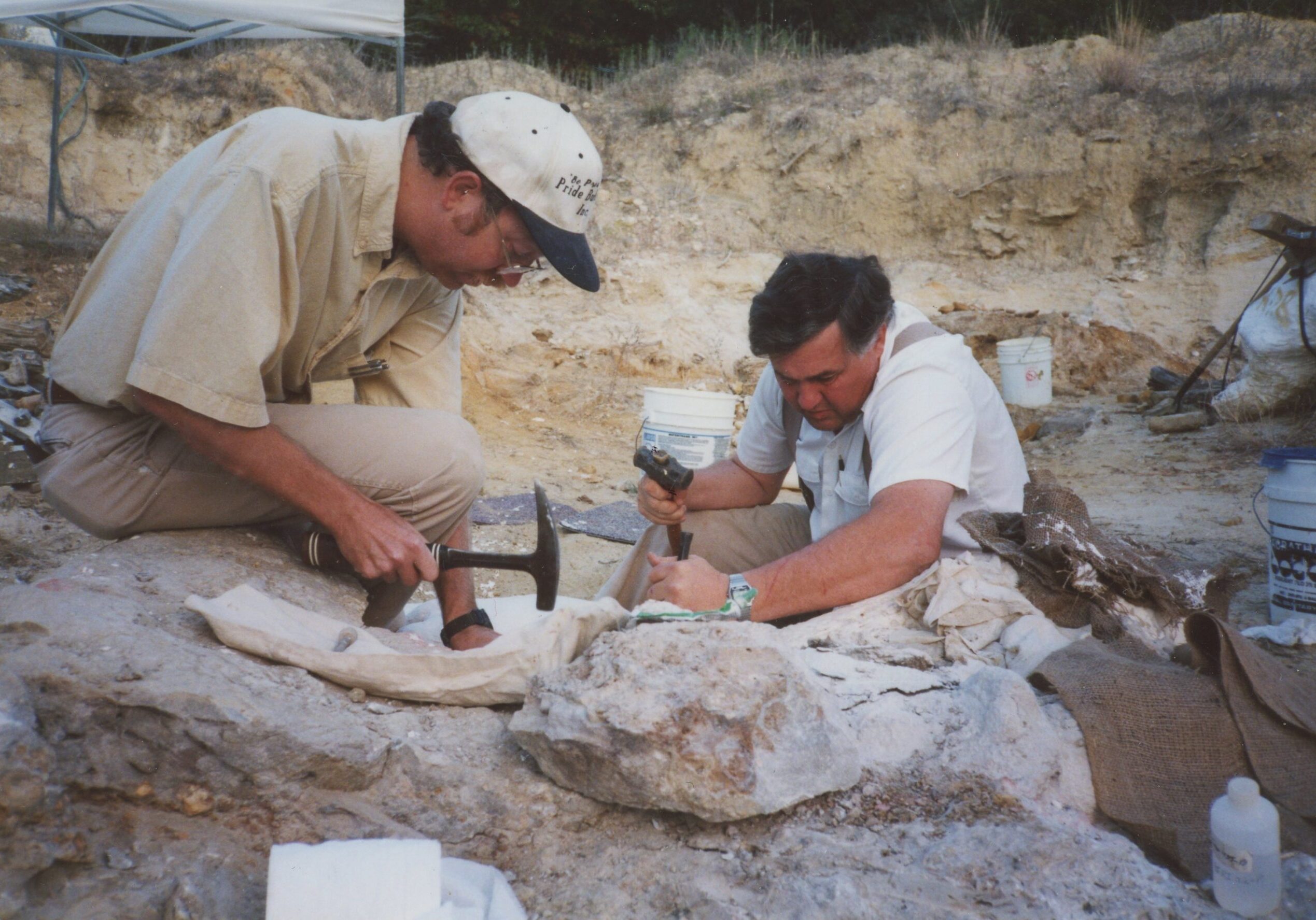
Dr. Dale Winkler, SMU and Jim Diffily, Fort Worth Museum of Science and History at the Jones Ranch excavation site.
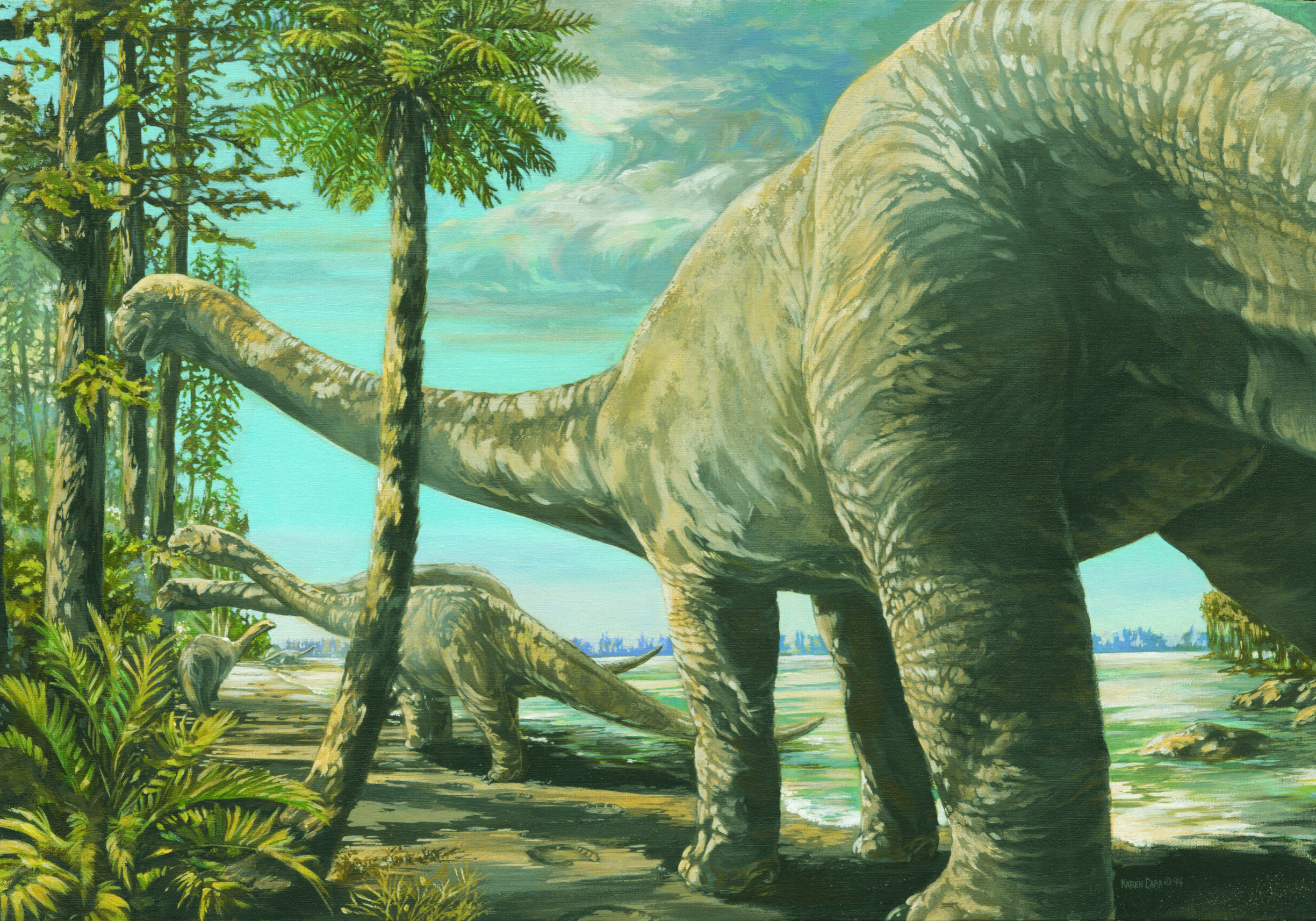
Karen Carr (b. 1960). Pleurocoelus, 1994. Watercolor on canvas. Gift of Karen Carr, 2009.
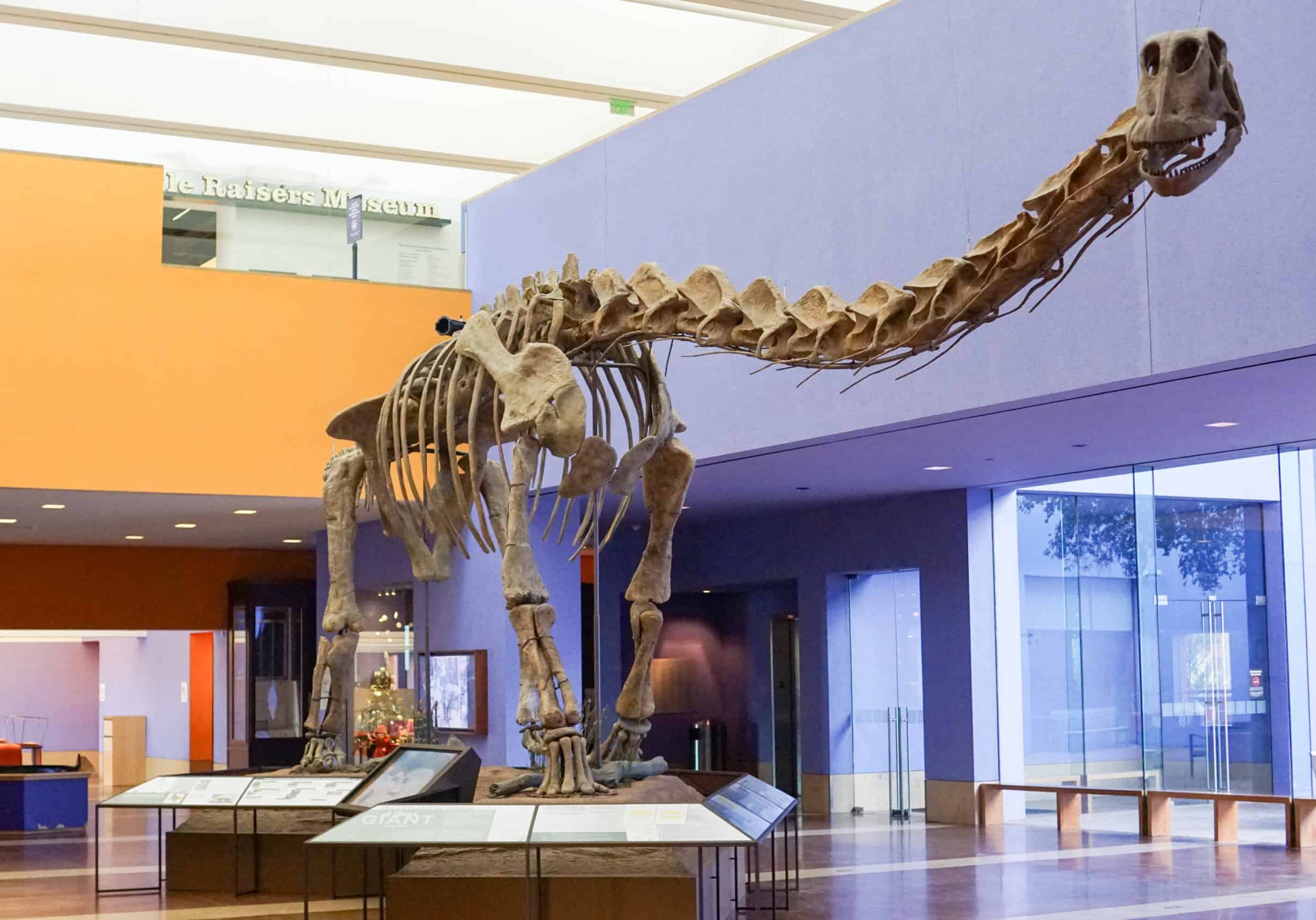
Paluxysaurus jonesi fossil mount on exhibit at the Fort Worth Museum of Science and History.
about the project
For more than 80 years, the Fort Worth Museum of Science and History has worked at the intersection of public education, scientific research, and Texas heritage. The museum has participated in multiple dinosaur excavations across Hood, Parker, and Tarrant Counties, including the Paluxysaurus jonesi site near the Paluxy River.
This oral history project focuses not only on the fossil itself, but on the people and processes behind it — from early reconnaissance and field excavation to laboratory preparation, exhibition design, and scientific publication.
*June 2025 Grantee Spotlight
explore the project
Watch full-length recorded interviews and read searchable transcripts, organized alphabetically by interviewee. Access is provided with the permission of participants; any restrictions are noted.
Colleen Blair
A retired educator and former FWMSH Director of School Services and Executive Vice President of Programs. Blair recounts her experience working at the museum, where she created an educational program called the Lone Star Dinosaur Institute. The program brought together Texas educators for a hands-on experience at the Jones Ranch dinosaur excavation site, providing them with resources and training to bring paleontology into their classrooms.
Jim Diffily
The former Vice President of Collections and Exhibitions for the Fort Worth Museum of Science and History. Diffily recalls the discovery of fossilized bone on the property of a Texas rancher that initiated a pivotal partnership between the museum and SMU. This partnership expanded through a series of excavations, including the Jones Ranch project, where the team later identified Paluxysaurus jonesi.
Eric Fincher
An exhibit fabricator with Rob Reid Studios and Azle Models. Fincher describes working for over a year to assemble and fabricate the fossil skeleton of Paluxysaurus jonesi for the Fort Worth Museum of Science and History. The project involved significant challenges, such as recreating missing bones and vertebrae using 3D modeling and sculpting techniques.
Wendy Gates
A former paleontology excavation volunteer. Gates describes her experience as a volunteer at the Jones Ranch dinosaur excavation site Wise County, Texas. She was invited to join the team of scientists, graduate students, and other volunteers to help uncover and study the dinosaur fossils found on the property.
Sandra Hines - Coming Soon
Dr. Bonnie Jacobs
Professor Emeritus at SMU's Department of Earth Sciences. Dr. Jacobs recounts her career path from studying pollen and spores to reconstruct past climates in Arizona to collaborating on paleobotanical research in Kenya, Tanzania, and Ethiopia. She describes her work on fossil plant remains, including conifers found at the Jones Ranch site, and how this research has contributed to understanding past environments and climate change.
Dr. Louis Jacobs
Professor Emeritus at SMU's Department of Earth Sciences. Dr. Jacobs is an expert in Earth Sciences and paleontology. In this interview, he recounts his work on dinosaur tracks, fossil insects, and small mammals, as well as his involvement in major paleontological discoveries and excavations in Cameroon, Pakistan, Texas, Angola, Malawi, and Mongolia. Jacobs also reflects on his time spent at the Jones Ranch site excavating Paluxysaurus jonesi.
Decie Jones
Former land owner of the Jones Ranch site and wife of the late Bill Jones. Jones discusses the dinosaur fossil discovery on their property near the Paluxy River. Bill and Decie were honored to have the fossils preserved for educational purposes and welcomed many different groups to their property. The interview highlights the Joneses' enjoyment of the experience and their desire to share the dinosaur fossils with the public for learning and teaching.
Mary Ann Jones
Daughter of Bill and Decie Jones. Jones recounts memories of the dinosaur dig that took place on her family's property, Jones Ranch. She highlights her father Bill Jones', fascination with paleontology work and his eagerness to learn from the scientists and researchers who came to the site. The interview also describes the excavation site camaraderie amongst the family, paleontology professionals, and volunteers.
Don Otto
Former President of the Fort Worth Museum of Science and History. Mr. Otto recounts his career in museum leadership, including his time as president of the Fort Worth Museum of Science and History. He discusses how the museum evolved to become more interactive and engaging for both children and adults, the Omni IMAX theater, and the partnership with SMU to excavate local dinosaur fossils.
Jeffrey Pittman - Coming Soon
Chris Sagebiel
Collections Manager, Texas Vertebrate Paleontology Collections at the University of Texas. Sagebiel describes the career and legacy of Dr. Wann Langston, a renowned vertebrate paleontologist who worked at the University of Texas for over 30 years. He highlights Langston's early interest in paleontology, his extensive knowledge and experience in the field, his generous and collegial nature, and his significant contributions to the university's vertebrate paleontology collections and research.
Charlie Walter
Director of Baylor University's Mayborn Museum. Walter recounts his 25-year career working at the Fort Worth Museum of Science and History, where he was involved in various dinosaur-related projects and initiatives. He discusses the discovery of the Paluxysaurus jonesi, and the museum's partnership with SMU researchers to excavate, study, and display the fossils. Walter also describes the museum's efforts to have Paluxysaurus jonesi designated as the official Texas state dinosaur.